What’s So Special About Counselling for Autism & ADHD?
I regularly come across opinions on the internet – especially from neurodivergent people themselves – that counselling doesn’t ‘work’ for neurodivergents, or worse that it is actively harmful. That opinion is backed up by some research. And yet… I’m an autistic, ADHD counsellor working with a majority autistic and/or ADHD client group. So obviously, I disagree?
Firstly we need to ask what we mean by ‘counselling’ (or ‘therapy’ – the words basically mean the same). From my autistic-person perspective, looking at how it’s portrayed in social media, it seems to cover a broad range of activities from the virtually silent counsellor who just listens, while the client easily rambles on about their personal issues; to behavioural techniques where attempts are being made to change the client’s behaviour (I’m thinking ABA here).
No shade on those counsellors, but that isn’t how I work. My approach (Humanistic, integrative, if you want to be technical) is adapted to support neurodivergent people (you might call it ‘Neuro-affirmative Counselling’ if you’re being fancy). We think differently, so the usual approaches often don’t work.
My style of counselling is about talking and listening to a person, helping them coming to terms with who they are, minus all the ‘shoulds’ and impossible expectations. Autistic and ADHD people get a lot of that – constantly being told our way of being is ‘too much’ or we should ‘speak up’ (sometimes both at the same time, which is confusing). Some neurodivergents are good at masking – hiding who they really are, sometimes to the point where they lose track of who they really are. Others are called ‘shy’ or ‘too quiet’. As if quiet equals having nothing to say (which I’ve never found to be true). Still others are called too loud, too opinionated, ‘need to sit down and focus’. We are all different, but we all struggle to have good self-esteem in a world where being neurodivergent is constructed as bad.
An environment where you can explore freely…
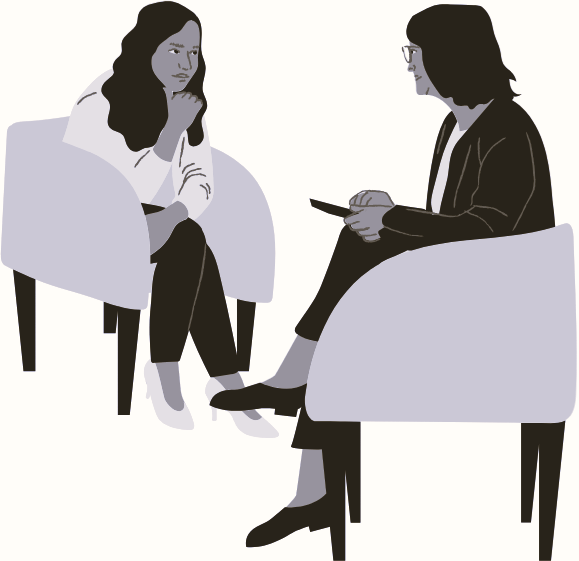
Being listened to – and more importantly, being heard and understood are vital experiences to help you grow psychologically. It’s a big part of what I try to offer my counselling clients. Humanistic theory holds that proper psychological growth requires an environment where you can explore freely. The counsellor can provide that environment by offering you three things: empathy, congruence (aka honesty and authenticity) and Unconditional Positive Regard.
It can be very difficult for a neurotypical counsellor to truly empathise with their neurodivergent client, although I’ve met some. Congruence to me is about being a neurodivergent counsellor who doesn’t mask or pretend I’m all sorted and don’t struggle with my AuDHD. I am neurodivergent like yourself, with all that that means. Unconditional Positive Regard isn’t about approving of everything you do (I’m not Chat GPT!), its respecting you as a fellow human and knowing you are doing your best. It’s about not judging, especially about issues like poor social skills or bad time keeping.
Passing on knowledge & experience…
Sometimes, my work has an element of coaching – ‘psycho-education’ we call it. Over the years, I have benefited from advice from psychologists and occupational therapists, and I’m happy to pass that on. I do a lot of research around neurodivergence, so I might pass anything helpful on to you. Some clients love all the technical terms and references to research; others that leaves them cold. I adapt according to your need. Counselling isn’t advice work, so the information I pass on to you might be incredibly useful, or it might leave you cold. I’m usually very happy to be argued with – I take it as a sign that my client is improving in their self-esteem and starting to trust their gut.
Other times, the client talks and I listen (with the odd interjection to keep the client on track or to pick up on important issues they may have glossed over). Because my clients are neurodivergent, I always have to be aware that they may go on tangents or they may struggle to put stuff into words, so I probably intervene more than many conventional counsellors.
Who are My Clients?
I work with clients who’ve recently discovered they are neurodivergent. They may not have a formal diagnosis – yet – but are fully committed to investigating the possibility. I don’t need to be able to diagnose myself to support my client’s exploration. And if they turn out to have something else, not autism or ADHD, I can support them with that discovery too. Despite my specialism, I am a trained counsellor and most of my training was about supporting clients who aren’t autistic or ADHD.
I often work with clients who’ve been formerly diagnosed autistic or ADHD, but then either the post-diagnostic service has finished, or they haven’t had much post-diagnosis care at all. One client once described it as having a ‘Drive-by diagnosis’. Thinking back, I think I had a drive-by diagnosis myself! Just diagnosed and then discharged without any backup. Post-diagnostic work usually involves a combination of psycho-education and helping the client learn about their differences, plus help coming to terms with their diagnosis. That usually involves an element of grieving – grieving the person they thought they were but will never be; grieving the fact that there is no ‘cure’, that they will be neurodivergent for life; and grieving the childhood that could have been so much better, had their difficulties been officially recognised.
When I was diagnosed, back in the day, I remember thinking, “I will never be normal”. At the time, that felt like a painful revelation. Up until then, I’d always assumed I had a mental illness and that once properly diagnosed, I could do the treatment and the therapy and get ‘better’. Now I realised there was no “better”, there was only autistic me. It was a long journey to learn to love and appreciate myself as an autistic person – and latterly, an AuDHD person. I have long since reframed ‘better’ as ‘being the most fulfilled person I can be’. And yes, thanks to a lot of therapy, I’m ‘better’. I’m still autistic!
My final, most common category of client, is the person who knows they’re autistic or ADHD (formerly diagnosed or not) and have long since come to terms with that reality. But since neurodivergence doesn’t make us immune from life’s struggles, they are encountering other difficulties. Examples might be workplace struggles, bereavement, relationship conflict, divorce, big life changes (Should they have a baby? Should they emigrate? Should they move their mum into a home?).
They could go to a regular counsellor as the issue isn’t much to do with their neurodivergence, but we used to call autism a ‘Pervasive Developmental Disorder’ on purpose, because it was pervasive: it affected every aspect of a person’s perception, communication and experience. For example, you can’t put the autism aside and deal with the bereavement as if it is nothing to do with it. An autistic person experiences bereavement as an autistic person: including differences in how grief is processed and expressed, issues around executive function (there’s a lot to do when someone dies, and a ton of paperwork they may struggle with) and a lot of dealing with strangers.
As another example, dealing with relationship breakups when you have ADHD. A common issue with ADHD is called ‘Rejection Sensitive Dysphoria’. You can get RSD when you just perceive rejection – dealing with an actual rejection (your partner leaving) is a whole other level of trauma. ADHD can also cause difficulties with emotional regulation. Trying to keep it together when your whole world is collapsing around you, is a challenge. You need a counsellor who understands that your ‘normal’ is probably different to a neurotypical person and help you regulate your emotions. We often call this ‘co-regulation’ – by my staying calm and focussed, I can help you find that in yourself as well.
I started this blog wanting to talk about how I work, but my work with every client is unique – neurodivergent people are more varied in their personalities and presentations than neurotypical people, despite having similar diagnoses. In the early days of the autism rights movement, we’d call each other ‘AC’, meaning Autistic Cousin. Gradually, we started forming connections with individuals with ADHD, and they became part of our ‘family’ too. AC fell into disuse. We tended to use the moniker ‘ND’ instead and as time went by, ND started to include others who thought differently: dyslexics, people with Tourette, people born with brain injuries, people acquiring differences in their ways of thinking and being… And of course our neurotypical allies (NTs) who have always been part of the movement, since the beginning.
Every neurodivergent person is unique, but like real cousins, we have a lot in common. Whether you’re autistic, ADHD, AuDHD or think you might be one of those identities, my experience can help you work with who you are, without masking and hiding.